


My thoughts on SPD
Christian is talking to himself out loud: “I have thought about YouTube a lot for a long time. I loved to watch some of the shows on YouTube and thought, “I can do that.” Then I thought, “Is it hard”? I asked my Nana and my dad if I could do it, and they said Yes!. My Nana told me that she had a camera and knew how to do the editing. I would need to help her understand what I wanted my videos to look like, so it would not be too hard to make my YouTube channel. Now, we had to decide what my channel would be.
I have sensory problems- and I love to travel with my Nana, so I decided my channel should be about those two things. I had a tough time in 3rd grade, and I was disappointed a lot because I could not do the science or fun things. I was bullied, but I did not think it was bullying because I thought they were my friend.
My Nana made sure I did those things at home, and so much more fun stuff. We put these on my channel also.
I thought, “I need people to understand I have sensory problems.” I want them to understand what that means and why I act like I sometimes do.” I don’t mean to break things or get mad, but I do.” I thought that if people knew me and saw me on YouTube, they would recognize me in person and say, “I know you, and I understand you have sensory problems.” I know you struggle with sensory overload, noise, hearing, and touch, so I will keep that in mind when I play with you.”
“I get so tired of being the only kid who always, and I mean always, gets hurt.” I fall when people push on me, I touch things too hard, and they break, and I give high-fives to those sometimes-hurt people. I get into trouble for all these things at school. I thought if I made a channel telling people how I am, they would understand. I found out that other kids have sensory problems, but don’t have my Nana to work with them. They still struggle with their issues like sound, touch, sight, and feelings. Sometimes I see them struggling, so I help them a little bit. I still have problems because I am not all the way normal, but I can help others. I still break things, but I know I am getting better, so my anger is not as bad, and I can control it better.
My dad would say, “Stop that tantrum, and he would fight with me (yell or get mad). Now, he understands it is a sensory meltdown and lets me have time in my room to calm down. I get over my disappointment or anger in a few minutes- not an hour like it used to take me.
I still get sent to the learning lab when I am struggling, or I go to my special ed teacher. I don’t want to leave the classroom, but my teachers say,” You have to stay caught up because we can’t slow down for you. If you can’t stay caught up, go to the learning lab or Mrs. H.” I have to go even when I don’t feel like it, but if I stay in the classroom, I will have a meltdown trying to keep up, listen, work, and focus. So that is why sometimes I have to go even when I don’t want to because I can’t keep up, and it bothers me. I get frustrated and anxious, the other kids distract me, and I get angry, eventually having a meltdown.
Part of my problem is all the noise in my classroom. While everyone is working at home, home-based schooling is beneficial because I can catch up on my work. No one is mad at me, yelling at me, or telling me to keep up, be quiet, or do my work. My Nana sets out my work, tells me what to do, and if I have questions, she stops what she is doing and helps me until I understand. Sometimes I get to use games, Legos, blocks, or other things to help me learn. She also reads to me, and I read to her.
I don’t like school because my teachers don’t help me all the time. Sometimes they do, but when I get behind, they just say, “You have to keep up.” That is not helping me, but the other kids need to stay on track. I like my teachers because they are nice and usually let me do fun things. Last year was bad, but this year was better. I don’t think I missed as many of the fun things this year.
I like homeschooling because I get to work and catch up. I can take breaks when I need one. I get to go outside and run out my energy by doing sensory exercises. These exercises always help me with the rest of the day. I don’t have many meltdowns, and I don’t fight with my dad as much. I don’t think I have had a bad meltdown and fought with my dad during my homeschooling.
I also learn more because my Nana gives me more work and fun things to do. I get to do science experiments, learn about my world, and we even learned about World War II. I don’t learn as much at school because I can’t hear, keep up, and struggle with my friends. I miss my friends, and if I am not in school, I won’t see them as much, but I am making new friends in my neighborhood.
My friends are mean sometimes, so I think if they saw my YouTube channel, they would understand and know what I struggle with because I get so tired of people saying, “What is wrong with you? Why are you falling all the time? Why do you have meltdowns?” If they watched my channel, they would know why I do those things. They would also know I don’t try to do them, and when I fall, it really hurts a lot.
If people watch my YouTube channel, they will also understand other kids. The latter have sensory problems and be nicer to them.
If you do not understand sensory processing disorder, you can find information online or ask an occupational therapist. Sensory Processing Disorder is not in the DSM, so a clinical therapist or psychologist cannot diagnose it. Most children with this disorder may receive the diagnosis as high-functioning autistic or just a problem child because they do not meet the criteria for ASD. People will mistake meltdowns for tantrums. Kids with this issue may not receive the help they need in school, as it is not an educated diagnosis. Your Pediatrician will refer you to an occupational therapist to diagnose the disorder. After the assessment, your Pediatrician’s doctor will decide whether to make the call or request further testing. Once this happens, your doctor can submit a 504 and their recommendations for the school.
It is not unusual for kids with sensory processing disorder to have anxiety due to the amount of sensory input, the pressure to be normal, and the lack of help in place for them. Christian did not mention that he works his O.T. daily. He would do some small-motor skills before school—for example, vestibular and proprioceptive exercises to improve balance and focus. We also work on memory and deep breathing. He could make it through lunch when he had time outside and could do the exercises he knew would help him continue his day. He is unique because he understands what exercises he needs and can administer them if the opportunity arises. Not given the time or opportunity to do what he needs to alleviate meltdowns. When that happens, he has a meltdown.
While at home during this time of home-based schooling, he is allowed the time to regroup, take a breath, and focus. He has learned that he is much smarter than he thought and can do the work he struggled with in the classroom. He is also reading more, comprehending what he reads, and writing better.
He lacks the social engagement school offers; however, he has neighbors, friends, and family who help fill that lack. However, during the pandemic, he has become fearful of being left, lost, or sick in public. It is not unique to sensory processing or even to special needs, and it is just a new normal to deal with during this unique and challenging time.
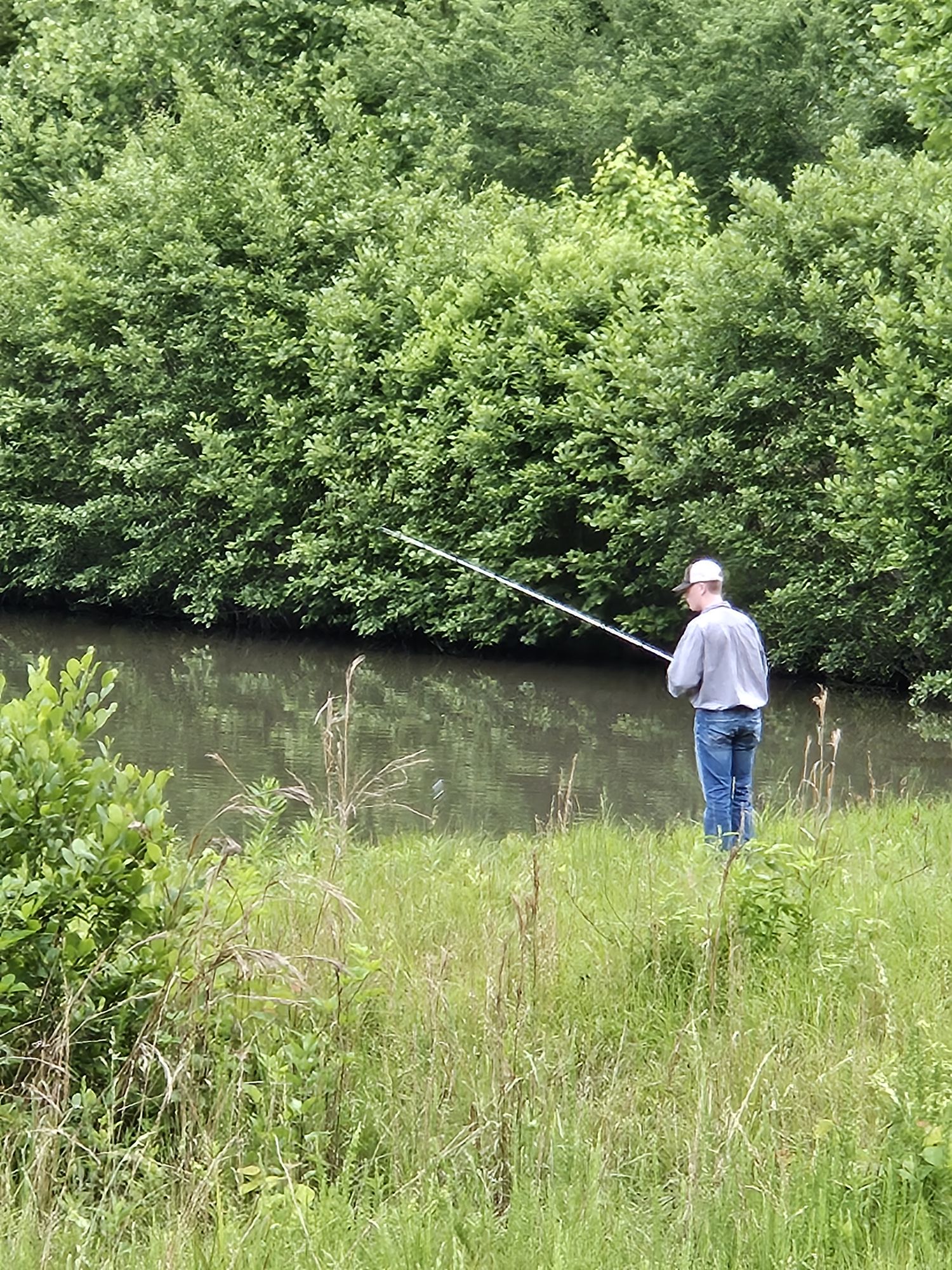
 Kid from Missouri travels
Leave a comment