2nd grade was hard, but 3rd grade was terror
When Pud was in second grade, he had already developed a schema for how life at school would be. Having been in school since age 3, he liked parts of it but hated others. People did not understand him, and he did not understand the school’s social ladder or power dynamics. This lack of understanding set the stage for his experience with classmates.
The kids who were his friends were only friends because of how the teachers said, ‘Friends, let’s pull out our…’ or ‘talk to all your friends.’ However, in reality, they were not his friends. A few students genuinely were, but he could not tell what the rules were or who might turn against him. Navigating these uncertain relationships made school challenging; he didn’t know whether other kids were being mean or simply including him in their games.
For example, in second grade, he wore a black hoodie and said: ‘death death death.’ As a result, he received in-school suspension because teachers considered his words threatening. He did not understand this interpretation. During that suspension, he missed lunch because the teacher forgot to tell him to get lunch or go. By day’s end, he was cranky from missing lunch and was thirsty. So the question is: who is at fault?
How do you teach your child to understand the rules when we may not realize the rules are different for our child with neurodivergent issues? We may not see the world as they do; we probably do not. Second grade was hard, and it was when Pud was identified as having auditory processing difficulties. The school asked for testing; his father said OK. No one reported or explained that his father needed to do the testing, or have it done, or where or how to do that testing. So, no testing.
Going into the 3rd grade was the hardest part. It was daily waiting for those school phone calls. It was not knowing whether there would be another meltdown and wondering how we would ever get past this grade. I was calling around to find different alternatives that would work for us. It was terror on all fronts. meetings, lost birthdays, broken toys, destroyed outdoor equipment, stolen pencils, and misunderstandings on a daily basis. This feeling of terror was not only Pud’s but his parents’. They had to decide what to do, how to go forward, and who to believe.
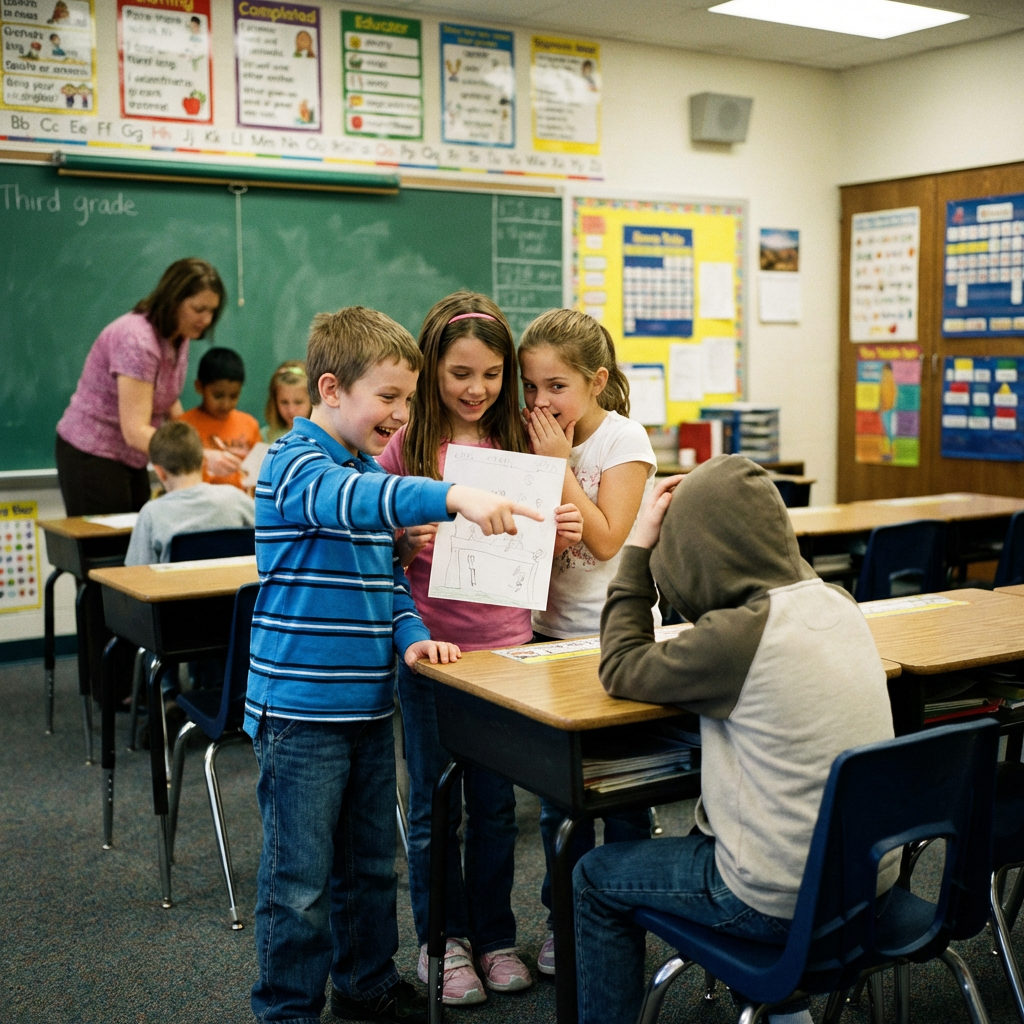
In the third, his friends were now the ones bullying him daily. They were the kids who were stealing his pencils- the mechanical pencils he needed to work with, they would take his sensory toys and tell him when he asked for them back, they also would say things like: I will be your friend this afternoon if you give me your snacks. They would rip his backpack and break his lunch bag. For safety, we started sending him with paper bags and soft bags that no one wanted or cared about.
He would come out of school crying because kids would reach over and push him out of line, which he would be in trouble for, or hit him in the head, and he did not know who did it, so when he yelled or cried, again he was in trouble.
This grade taught him not to ‘not sepak’, not to tell, and that teachers don’t care. This was a hard year.
He started Occupational therapy this year. We pulled out everything we knew to do, and before school, we practiced. We practiced yelling: stop! We practiced kickboxing to defend ourselves and proprioceptive and vestibular exercises. We set up obstacle courses all over the house to build his strength. We changed how we sent sensory and calm-down help.
This is the year we began to travel and build social media as a YouTubber. He also learned photography. He was able to get his voice out to the world. School was terror but home was safe, good, and exciting.
It was a hard year, but we got through. It was so unfair, and it was the truth of how schools treat our kiddos with neurodivergent minds, all because they require the teacher to think outside the box and change the classroom a bit. To see themselves as a teacher.
 Kid from Missouri travels
Leave a comment