
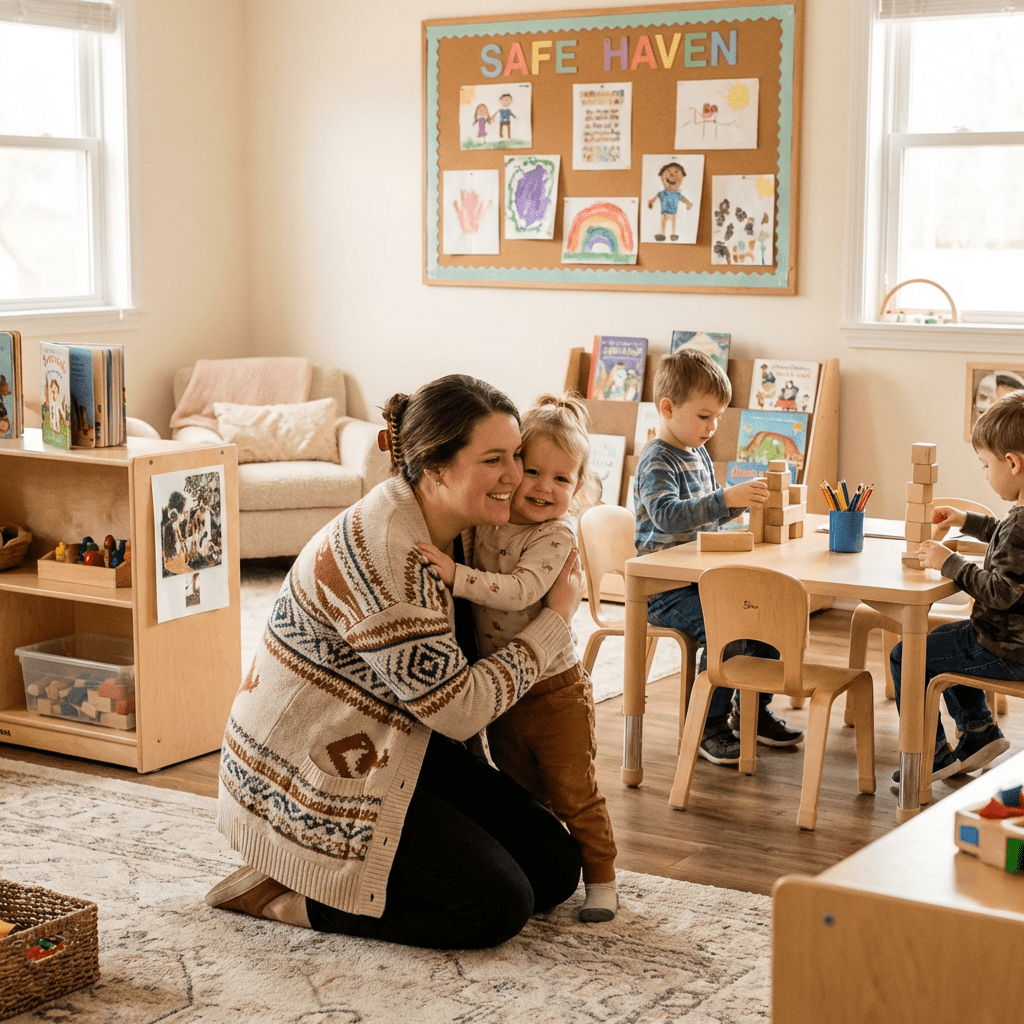
Pud is developing a working schema for attachment, understanding, and safety. He has built knowledge and security regarding each parent and his grandmother (Nana), who is his primary caretaker at this stage in his life. He is meeting people, and learning his schema and attachment style is helping him navigate new and challenging situations. He has begun to understand that he can trust some adults to take care of all his needs, but some adults are different and do not connect well with him, which means they don’t understand him or take care of him. He is also learning that some people prefer girls and others prefer boys. He has noticed that all boys and girls are different from him, but some like the same things. Some are not very nice, and some are very quiet.
Not all adults or children in his life understand him. Some do not listen to or focus on his needs. He becomes frustrated and has engaged in sensory meltdowns when with his mother. He also has meltdowns when he is scared, hungry, or tired. His mother takes him to his papa and his other grandmother. They do not understand him or his needs and become frustrated or worried about his eating habits. They do let him play outside and get down and dirty in the grass, with sticks and mud. His father does not like this type of play; however, in this new environment, Pud is allowed to have fun and get the sensory input he needs. He understands new sensory play, which leads to a new time with his grandma.
Pud has also learned this year that his primary caretaker has a job, a new role which puts him in a scary situation as he is not sure who will feed him what he likes, know what he is saying, or understand his needs. He is learning to adapt to this new caregiver and go with them after school without crying. He still cries, but they give him things if he does not cry in front of others. So he tries very hard to stay focused on not crying. When his day is very stressful and hard to handle, he will cry when they pick him up. They get mad because they don’t understand that his tears are due to stress, tiredness, hunger, and anxiety from his day at school, not because he doesn’t enjoy being with them. His father is concerned about this change and added stress, anxiety, and fear will do damage to his emotional well-being. His mother is not concerned and reports that he just has to get used to them and will get over it. Pud cries and has bad dreams, does not eat well, and becomes aggressive. He reports that he closes his eyes, remembers his nana, and it helps. The strong, secure attachment he and his nana share, which reminds him to be happy with himself and to find what makes him feel positive.
Pud is beginning to understand that he must develop mental pictures of what will happen regarding the adult who will pick him up. Now he will learn to communicate his needs with limited language skills. He will begin to work hard, trying to navigate and understand his world — bedtime comes early each night as he is exhausted by his new daily routine.
Pud was so excited to be going to school. He was ready to play with new friends and have so much fun! He knew he was going to have fun, play games, and eat cookies, just like they showed on TV. He was ready with his new clothes and a backpack. He loved his backpack and would put heavy books and clothes in it daily. He woke up with a smile on his face every day, expectantly waiting for his time at school. He could see his friends and play games.
Pud never once thought of missing school; even when he was sick, he wanted to be there. He saw it so differently from his parents. Pud and his father would read stories and bring the paper to class in the morning. They would put a sticker on the little square next to his name. Pud would walk to the teacher with a huge smile and take something from the prize box: he loved the small tootsie rolls and could not resist taking them quickly and carefully, savoring the feel of them in his hands. He would eat them slowly. With chocolate running down his face, he would join his class for circle time. He would have a smile on his face as he examined the classroom to see what new items were out on the table and where his friends were.
Pud was one of 5 boys in the classroom. He was not as hyper or rowdy as some and more than others. He was happy and always excited. He soon realized he was not like the others. He was in trouble quite often, and he had to sit in the prickly thinking chair, and he did not like the feel of that chair, and it made him cry sometimes. He tried hard to be very good, but he would be in trouble for hitting or pushing. He tried to tell the teacher what was happening and why he was hitting or grabbing the toys, but his words did not come out. He did not like this chair and was sad he never got the M & M’s for Win-Win. Things were not like they said on Daniel Tiger.
Pud is struggling with a sensory processing disorder, which has not been detected at this time. The pediatrician knows something is wrong. He wonders about high-functioning autism, but is not sure if it is sensory processing. His teacher understands he has sensory needs and a possible sensory disorder, but not enough information to suggest special needs help and additional testing. At this young an age, it is difficult to know what to do. It may be hard to understand how to work with the child and parents. Detecting needs for early interventions can be challenging.
Pud only knows he does not mean to hurt when he touches people. Proprioceptive and vestibular senses develop slowly, affecting his other senses and his ability to interact with peers.
Pud’s parents began to see a change in his behaviors as he was more aggressive and angrier when he was -home. He needs constant attention or sensory input to grow. They were not sure what was happening or why he was in trouble so often. They had daily meetings with the teacher as part of their preschool practice. The teacher felt Pud required testing and may have a sensory processing disability. She was not sure if the family wanted to put him in a special education class or a school for kids with autism or special needs. Pud’s parents knew he was behind in his language; however, they also knew from his past testing that he did not need the Autism school. They hoped to mainstream him and help him along the path of ‘normal’ school.
Pud’s teacher was kind but firm. She was not sure how to handle him in the classroom, as she was not a special education preschool teacher. She had a schedule to follow for the year, and Pud was disrupting her class at least twice a week. He was not the only one who struggled, but his parents were the only ones who would not move him to an autism or alternative school. The most she could get them to do was speech class. Again, this was an interruption in her plan. As the year progressed, Pud and his teacher found common ground. She would continue to work with him, and he continued to learn slowly. She knew there were issues, but, hands tied, she could not move forward with the testing or changes she felt would work.
Pud loved school, and the idea of staying home never crossed his mind. He was learning, having fun, and making friends. He had friends to invite to his birthday party! He did not know why he fell so often; or why he was yelled at for pushing when he was not pushing, he also tried to talk and could not get them to understand him. He was thoughtful and would watch everyone. He knew the teacher did not see what the other kids were doing and only noticed when he fell, yelled, or bumped into someone. Pud loved seeing his nana pick him up after school. She would hold him and make him happy. She would tell the teacher what he was saying. She would give him milk and read a story. She was mean but nice.
She would make sure he had his things when it was time to go home. Sometimes his teacher gave his stuff to other kids and wouldn’t listen when he tried to explain that it was his. He felt safe with her, but it was hard to be at school.
Pud’s mother was concerned as the teacher seemed too strict with Pud. He was only three, and this teacher made them sit against the wall, and he was always crying when she came to pick him up. She was not sure she liked the idea that he was crying, and she did not know whether it was happy, tired, or frustrated tears. She worried it was her stress related to school. She did not have the opportunity to pick him up often because she worked, so she was not a good judge of Pud’s emotional state.
She was also concerned he did not have all the stickers she knew he should have because she read to him. She was not sure how often she understood, but she knew she did read to him almost nightly. He was also hungry when she picked him up and would find the snacks, and she gave him in his pocket. She knew the teacher would not let him eat them for a snack. He cried because she had to take them away, so he kept them hidden in his backpack. Mom was not sure school was good for him at this age. She knew he had some special needs, including speech and social interaction difficulties. She thought the teacher might be correct in her assessment that he needed the special school she felt would help. She was conflicted and uncertain in her judgment of her child.
Pud was happy to see his mother when she picked him up from school. He liked his nana, but his mom was good, too. She would carry him and hold him tight. He loved being held tight. She also let him run and play with sticks. He did not have to eat real food with her; sometimes, he ate at the table with the others. Sometimes he did not have to eat at the table. He was free to play, but it was scary with mom sometimes also.
He knew his father worked, but loved seeing the bright blue truck pull up. It made him feel safe and excited to look out the window as they were driving. It was full of Dad’s smell and the sights of the drive home. He was not sure if his dad understood what he felt or was saying. He knew Dad could make out what he was saying and would stop everything to listen. He would say a bunch of mixed-up words and jesters, but somehow, Dad knew what he wanted to tell him. He thought it was harder to talk to dad because he did not understand these signs and sounds most of the time, but sometimes, well, that was good days for sure! His dad usually took him for ice cream or to the park on beautiful days. Those days were the best.
The school was hard but fun for Pud. He loved being with other kids, and socially, he enjoyed all it offered. He struggled with letters and reading, but he did not talk very well, which hindered communication. He understood everything that was going on. He just could not communicate what he felt or knew how to express himself. People thought he was hurting them, pushing on them, or not listening. It was hard at school; it was not like when he and his family went places, and he could touch things and just play. He missed his sister, who was two years older. She played with him and let him act; however, he wanted to.
At school, he would sit and watch the other children play with the toys, but his sensory needs overtook the moment, and he would be in trouble for grabbing or pulling toys or items. He would rush to the new things to feel, smell, and listen to, taking everything in. It was not always his turn, and when it was, he would bump into other kids due to poor balance. He tried so hard and was so exhausted at the end of the day.
Most days, his nana picked him up; it was so nice. She would bring instant breakfast or milk. We would take walks to the house, or she would bring the wagon and my blanket. This was so nice! Pud liked it when she picked me up. They would talk about school, and she would listen to me. Sometimes she frustrated him, and he would cry because she did not understand. He would hit her when frustrated or disappointed. She would hold me tight and let him cry.
They would keep walking or sit in the rocking chair until he was quiet.
Nana was lovely to come home to.
She was safe and understood him.
Pud says, “I wonder if all nana’s or parents know how to do these things, or if they have to learn? My dad and my mom know some of it. My nana seems to know what to do most of the time.”
 Kid from Missouri travels
Leave a comment