
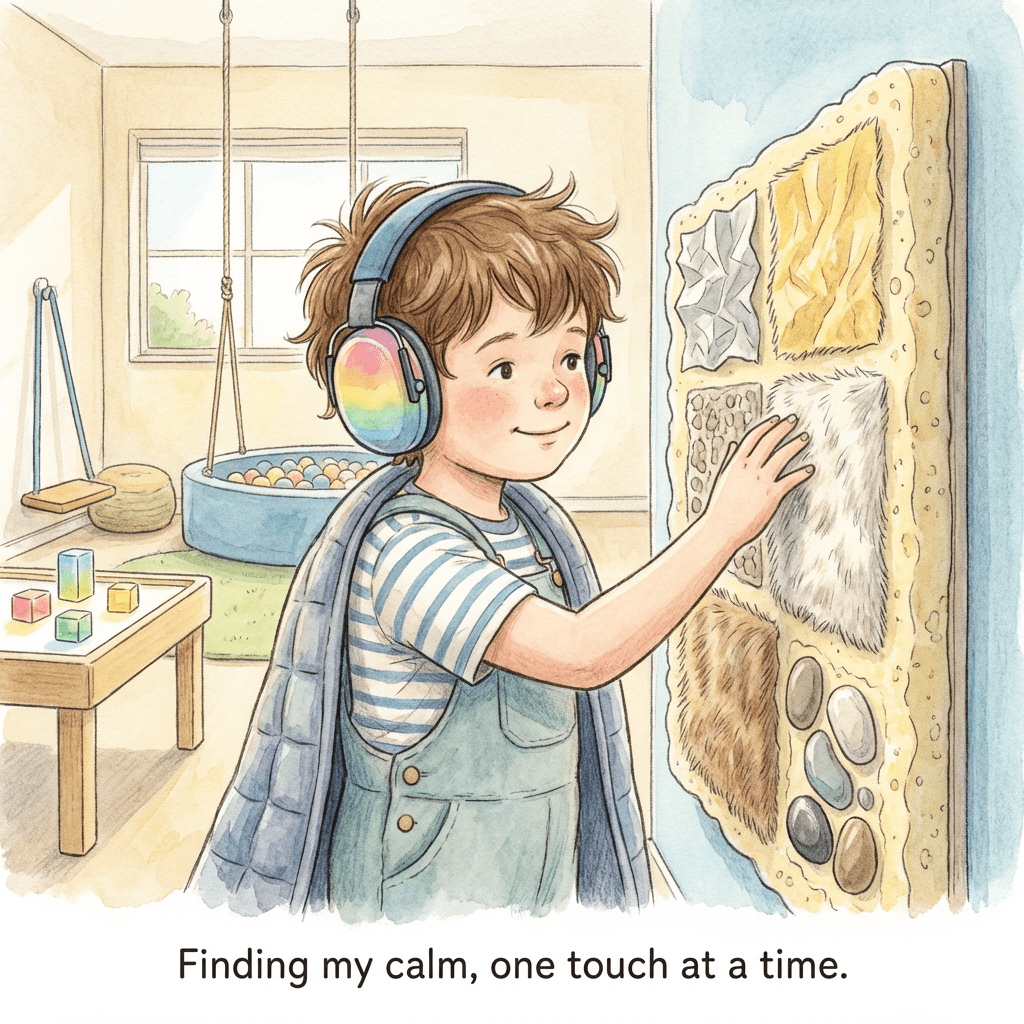
Watching children struggle with sensory processing disorder is a real challenge, as it is not a Therapeutic diagnosis. It is an Occupational Therapy Diagnosis that has to be reviewed and approved by the child’s pediatrician. This is a challenge for parents and teachers, as they see an issue but cannot put their finger on it. I remember when parents would ask, ” What is it? How do we fix it? All true concerns with teachers and parents. Sensory Processing is hidden and called other diagnoses such as autism, ADHD, or behavior disorder. Once the true diagnosis is determined, the work can begin. My grandson’s journey was a long one; however, we knew he had sensory issues, but we just did not understand that the sensory processing diagnosis was related to meltdowns, eating, and speech.
Pud started school starting at age 3. He struggled as he never felt he was pushing or pulling on other children. He was not bumping into them on purpose. He was trying to play, but his play was rough. He broke toys, hit kids, and ignored the teacher. His sensory problems were noticed, and the school asked for an assessment to put him in the autism unit, or as it was called, the Co-op for the county, which taught children who were not appropriate for regular public school. His schoolteachers were concerned with his behavior and attention.
Due to other circumstances, he was not tested for sensory processing disorder. He had been tested with every test his doctor could consider to address eating, sensory, hearing, sleeping, shaking, and speech. He was poked and prodded until he was frightened of every person in a white coat. His parents said no more testing. The school helped; however, it was hard for him.
The doctor asked for a sensory processing assessment as he wanted to rule out Autism. In kindergarten, his teacher noticed hearing and processing problems and asked for an auditory processing assessment. This was never done due to the cost and lack of insurance. He finally ruled out Autism and, by the 1st grade, knew his patient needed extra help in school. The only help he could give was an ADHD diagnosis with the preference for small classrooms, extra help, sensory breaks, and speech. The school gave my grandson 45 minutes of pull-out. The teacher, tutor, and special education teachers for reading, math, and speech were appalled. In 2nd grade, his special education teacher added extra time and support to his IEP. He was able to navigate his Elementary school, which had been in that building for 5 years: PreK twice, Kindergarten, 1st, and 2nd grades. The sounds, smells, feels, and expectations were ground into his memory. He had some good teachers and some not-so-good. Some understood the sensory issues were running the show, some were concerned for his and others’ safety, some were able to see past the behaviors and see the child.
By the 3rd grade, he was in a new school, a new teacher, new friends, and new expectations. He struggled with all of it. He cried for most days. He was in trouble every day. He was in the principal’s office most weeks. He was behind in all his academics. His teacher only saw the behaviors and the disturbance in her classroom. This was only October! He was denied his birthday cupcakes at the school. The expectations and excitement were too high, and he could not meet them. We took the cupcakes home, as after three days of not meeting the expectation, his spirit was broken. He was in a power struggle with his teacher almost daily.
At just the right time, his doctor asked him to be assessed for sensory processing disorder. He was also sent for speech-language assessment. His doctor was not sure the ADHD was appropriate, and the need for an update for the 503 was evident. The assessments were ordered, and the paperwork was filled out. The cost was not covered by insurance, so it was privately paid. The testing was short, easy, and fun.
The results were not surprising, but the extent of the need was devastating and required a reassessment of his abilities and needs. This knowledge may be the hardest thing a parent has to address. Their minds become filled with fear, regret, and guilt. They begin to look back at all the issues their child has had over the years before the time of the diagnosis. They begin to notice patterns and outcomes that lead to negative consequences and meltdowns. A diagnosis can be both a blessing and a curse. As a parent, you have to change how you look at your child, how you act with him/her, and what you expect for their lives. It can be difficult for a parent to change their life path, which includes school, home, community, and future. It also changes the way a person parents their child. It requires looking at your child with new eyes and fighting a different battle to include the new diagnosis.
With the assessments completed and the diagnosis added to his records, it was time to move forward. How to work with the Occupational Therapist when the insurance will not pay the cost of the visits. Where to get the Auditory Processing testing when it would come out of pocket, and our pockets were not full or deep. It was time to be creative and learn how to do what needed to be done at home, and I hope it will overflow into the other areas of his life.
Once we understand that he could not cross his midline, it revealed that he struggled with using short-term and working memory, or accessing parts of his brain when under pressure. It also meant that if pushed too hard, he would have a meltdown. His meltdowns were becoming violent and self-harming. It was a concern for his safety and the safety of the others around him. It would be imperative to train him to use some self-regulation skills and communication skills, and understand how to change his focus to have shorter meltdowns or work through issues and disappointments without violence or self-harm.
The process began and went surprisingly well; we saw changes in most areas of his life. The school could change its IEP to add a few more minutes and, when needed, use a sensory room for self- and co-regulation. Math was still tough, and maybe for a long time. Finding the right type of teaching, the level of reasoning, and ways to increase his working memory are important. It was a struggle while finding the balance between school and home, which included homework and play. Once we did find the correct sensory diet for a morning routine, he was able to handle school with a new focus. He also used his emotional language to address frustration and disappointment. He still struggles with meltdowns. The stubbornness has not left. But his joy is renewed, and a plan for the future is in place.
Continue to follow Pud’s story as we go back and look at how he made it this far!
 Kid from Missouri travels
Leave a comment